
The Best Infant Car Seats of 2026
According to car seat experts and thousands of parents.

By
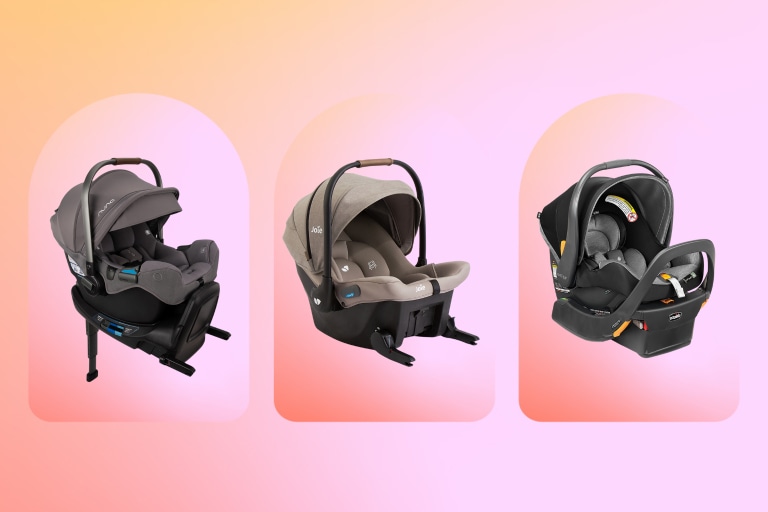
Everyone builds their baby registry differently, but for most expecting parents, there are a few particular products that trigger a healthy dose of down-the-rabbit-hole research (plus a side of mild panic).
Infant car seats almost always top that list. (Strollers are next, if you’re curious.)
We get it. Choosing a car seat feels like a high-stakes decision—because it is. You’re counting on something to protect your baby on every drive, and the options are endless. And pre-parenthood, car seat lingo is a foreign language. European belt paths, anti-rebound bars, stability legs…you don’t even know what these features are, let alone which ones actually matter.
That’s where this guide comes in. It’s different from most best-of car seat roundups because it’s written from both an editor’s and an expert’s perspective. In addition to being Babylist’s gear editor and a mom of two, I’m also a CPST—a Child Passenger Safety Technician—with specialized training in car seat safety, installation and helping families choose the right seat for their baby, vehicle and lifestyle. Staying current as a CPST requires ongoing education, manufacturer trainings and real-world problem solving with parents—work I do regularly with my own community and with Babylist parents.
This guide brings all of that expertise together, pairing clear, vetted product picks with everything you need to know about infant car seats: the safety features that matter, how to choose the best seat for your family and more. For our four top Babylist Picks, I narrowed in on the best infant car seats overall—the ones I consistently recommend because they’re dependable across the widest range of babies and vehicles. Each one rose to the top for the same core reasons: user-friendly installation, strong newborn fit and support and practical safety and convenience features that make it easier to use the seat correctly every single ride.
And because "best overall" isn't always "best for you," I’m also including top picks for specific situations, like the best lightweight seat or the best pick for smaller cars, that's so you can zero in on the best option for your family, not just the seat you've heard about the most on social media.
How We Judged
The Best Infant Car Seats
These are the best infant car seats overall—the go-to picks I confidently and consistently recommend to new parents and have trusted with my own kids. They’re easy to install, provide a dependable fit across a wide range of babies and vehicles and offer valuable safety features beyond the basics.
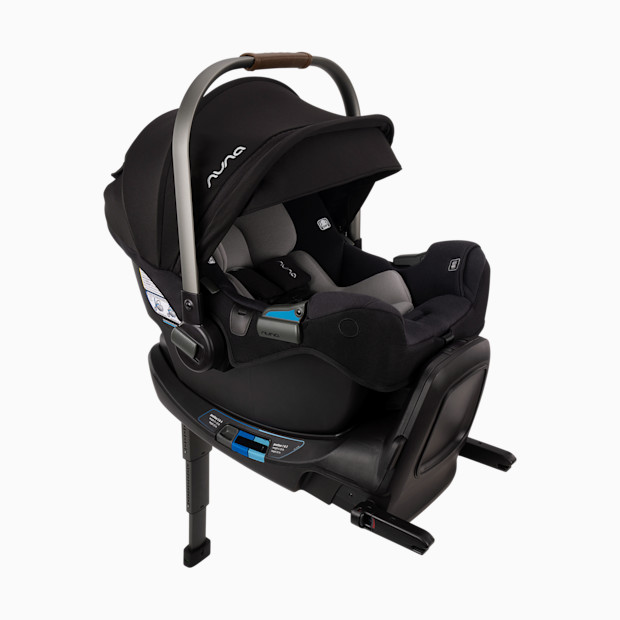
Babylist Pick: Nuna Pipa RX
Pros
- Premium safety features, including rigid LATCH and stability leg
- Excellent newborn fit, even for smaller babies
- Lightweight
- GREENGUARD Gold Certified, flame retardant-free
Cons
- Harness straps must be manually rerouted as baby grows
- Tricky to clean
- Longer seat front-to-back
- Pricey
TL;DR
A premium infant car seat that excels in safety, fit and ease of use. The Nuna Pipa Rx is lightweight, fits newborns of all sizes and installs securely thanks to rigid LATCH. It’s free of chemical flame retardants and is GREENGUARD Gold Certified—but it’s expensive, longer front-to-back and has a few convenience quirks to consider.
It’s no easy feat to find a car seat that’s as universally loved by parents as it is by CPSTs. The Nuna Pipa Rx is that seat. Voted the top infant seat by Babylist parents in our annual Most Loved Baby Products survey, it also checks all the boxes on what I look for in a car seat: a good fit, key safety features and an easy install.
The Pipa Rx is, simply put, an outstanding all-around car seat. It fits all shapes and sizes of babies, a really important feature for an infant car seat. (Babies have floppy heads and tiny airways, and achieving a proper car seat fit is critical, especially in the early months.) Fit-to-vehicle—how a car seat fits in the car you drive—is also great; it works in almost any car, from smaller, more compact models to larger SUVs. It’s lightweight and easy to carry at just over 7.5 pounds, made with flame-retardant-free fabrics and is GREENGUARD Gold Certified.
Safety-wise, it shines. All infant car seats sold in the US are safe—they all must pass the same federal safety standards—but the Pipa Rx includes a few standout additions. It’s one of the few infant car seats that use rigid LATCH, an installation system that uses metal connectors to attach to a vehicle’s lower anchors instead of straps or hooks. This makes installation secure, fast and nearly foolproof. There’s also an anti-rebound panel and a stability leg, two safety features that help absorb energy and limit the seat’s movement in the event of a crash. “We have so much peace of mind knowing our baby is safe anytime she is in the car,” one parent told us.
A few other noteworthy features to love include a fully extendable canopy, called a Sky drape, buckle holders to keep the harness straps out of the way when you’re loading and unloading and extensive stroller compatibility (without adapters for Nuna strollers and with adapters for a wide range of other brands).
Worth noting:
You’ll need to rethread harness straps manually as baby grows.
It’s a longer seat front-to-back, which can be an issue in very compact cars or tall drivers/passengers.
Because of the additional safety features and premium fabrics and finishes, the Pipa Rx is an expensive seat.
Stability legs (sometimes called load legs) are permitted in most, but not all, vehicles. Check your car manual before you commit.
Additional Specs
Child Guidelines: 4-32 lbs, 16-32”
Car Seat Carrier Weight: 7.6 lbs
Stroller Compatibility: See list
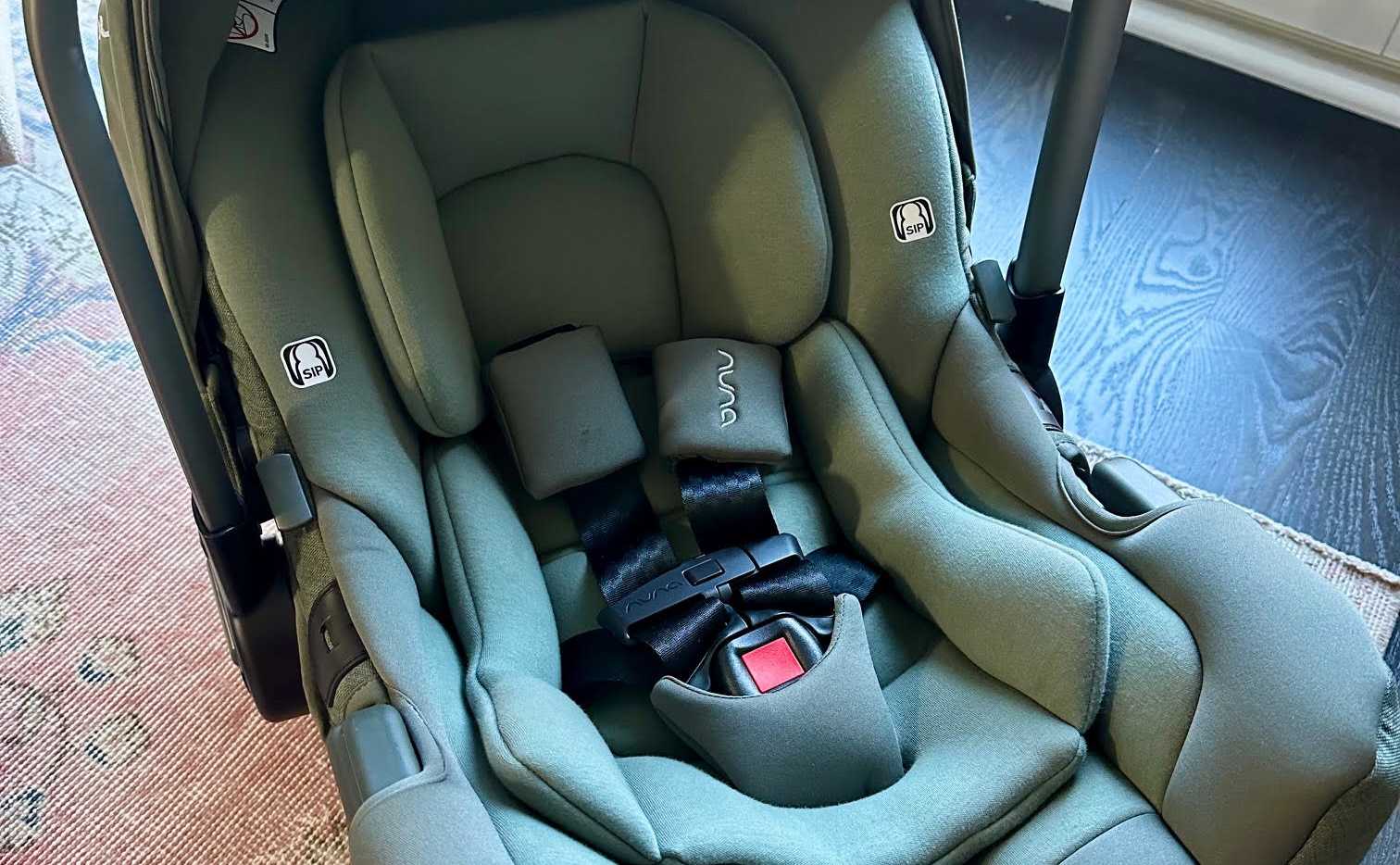
The Nuna Pipa Rx Infant Car Seat in Pine. (Photo: Jen LaBracio, Babylist Senior Gear Editor)
Babylist Pick: Chicco KeyFit Max
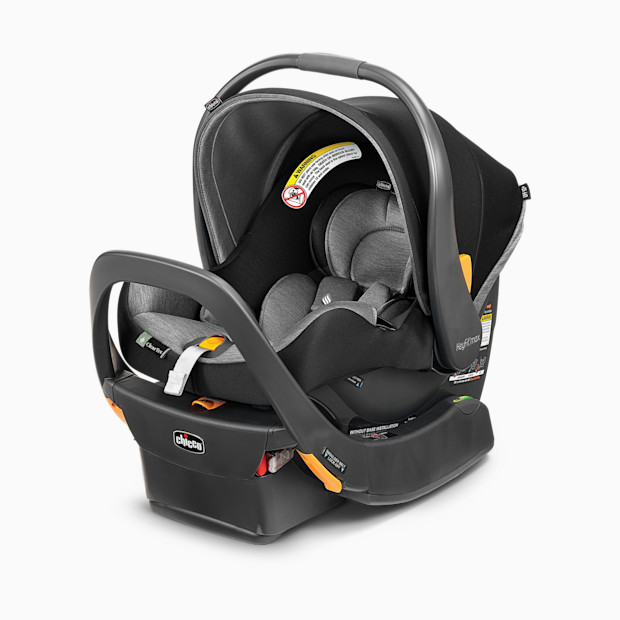
Chicco KeyFit Max ClearTex Infant Car Seat - Legend
From $249.99Pros
- Loved by parents and car seat experts
- Excellent newborn fit, even for smaller babies
- Slim enough to work 3-across in most cars
- GREENGUARD Gold Certified, flame retardant-free
- Compatible with a wide variety of stroller brands
Cons
- Longer seat front-to-back
- Heavier than some other infant seats
TL;DR
A trusted infant car seat that delivers excellent newborn fit, easy installation and strong safety features at a lower price. The Chicco KeyFit Max ClearTex works well in a wide range of vehicles, including many three-across setups, uses flame-retardant-free fabrics and pairs with tons of strollers, though it’s a bit heavier and longer front-to-back than some competitors.
Chicco’s KeyFit line has been a trusted infant car seat staple for decades, and with good reason. Like the Pipa Rx, it’s consistently praised by both parents and car seat techs for its fit, safety features and ease of installation—but sits at about half the price.
As a CPST, fit is one of the biggest car seat issues I see new parents struggle with: both how a car seat fits and supports their newborn and how it fits in their particular vehicle. Like the Pipa Rx, the KeyFit Max shines in both areas. It’s fairly narrow, so it won’t take up a lot of space width-wise in your back seat. (It is long-ish front-to-back, though, so keep that in mind, but only if you drive a very compact car and/or have very tall folks up front who need the seats pushed way back.) It’s also great for smaller newborns. “It fits even the tiniest babies really well,” adds Samantha Taylor, CPST and the voice behind Mama Knows Car Seats.
Installation is also very easy. There’s a tightener in the middle that pulls the base securely in place and a built-in, easy-to-read level indicator that lets you know when the seat is correctly positioned. “This tried-and-true installation is one of the easiest on the market,” echoes Rebekah Kimminau, CPST and founder of The Baby Gear Consultant. This is important not only because it makes installing your seat a lot less stressful, but because an easy-to-install car seat is one that you’re more likely to install correctly—and a properly installed car seat is a safer car seat.
Safety-wise, there’s an anti-rebound bar to prevent extra movement and absorb energy in the event of a crash. The ClearTex fabrics are both GREENGUARD Gold Certified and free of synthetic flame retardants. And parents frequently call out the seat’s no-rethread harness (making fit adjustments quick and easy as your baby grows), the removable, washable cover and the seat’s compatibility with a wide range of strollers.
Worth noting:
The Max weighs about 10 pounds, a few pounds heavier than some of the other infant seats on our list.
The anti-rebound bar on the base extends legroom for your baby, but it does make the seat longer from front to back. Taller parents may be uncomfortable if it’s behind their front seat.
Additional Specs
Child Guidelines: 4-30 lbs, up to 32”
Car Seat Carrier Weight: 10 lbs
Stroller Compatibility: See list
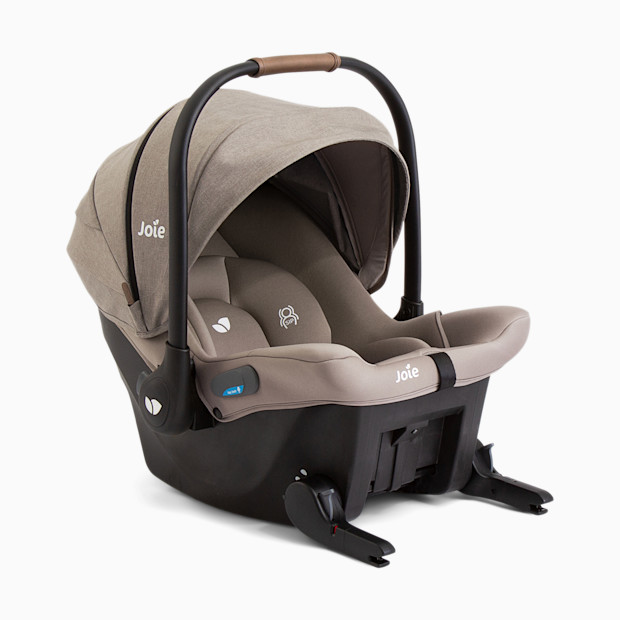
Babylist Pick: Joie Mint Latch
Pros
- Installs quickly and easily without a base
- Perfect for city families who don't own a car
- Most affordable baseless seat on the market
- Lightweight
Cons
- Harness straps must be manually rerouted as baby grows
- Only compatible with Joie strollers
- Baseless is convenient, but you'll need to uninstall and reinstall the seat in your vehicle each time
TL;DR
A lightweight, baseless infant car seat designed for flexibility. The Joie Mint Latch installs quickly without a base using built-in rigid LATCH, making it a great pick for city families, rideshares and families who switch cars frequently. It’s easy to use and compact, and it’s a great value, but you’ll need to reinstall it each trip and stroller compatibility is more limited than with some infant seats.
Most new parents are surprised to learn that you can install any infant car seat without a base using your vehicle’s seatbelt. (You can!) But it can be time-consuming, especially at first as you're learning to get the hang of it. Baseless seats skip the base altogether and instead use rigid LATCH connectors built directly into the seat itself—just click the connectors right into your vehicle and you're good to go. It's a convenient feature for any family, but I especially recommend it for urban parents who don’t own a car and rely on rideshares to get around or for parents who need a seat that switches between cars quickly and easily.
“So easy to use and the baseless car seat is CLUTCH,” said one parent in our annual survey. “The car seat is so simple to use and convenient in making it possible to take baby in almost any car,” added another.
There are only a few baseless car seats on the market, and the Joie Mint Latch seat is a personal favorite. It weighs about nine pounds, and since there’s no base, it's also fairly compact (especially front-to-back), so it works in a wide variety of vehicles. The fit is really good, even for smaller newborns, and the fabric is soft and breathable. It also happens to be the most affordable baseless infant car seat on the market—an added perk.
Worth noting:
The Mint doesn't feature a no-rethread harness, so you'll need to manually reroute the straps as your baby grows.
Joie infant car seats manufactured after May 2025 are compatible with select UPPAbaby, Stokke, Bugaboo and Mockingbird strollers, with adapters (sold separately). Older models are compatible only with Joie strollers.
Additional Specs
Child Guidelines: 4-30 lbs, up to 30”
Car Seat Carrier Weight: 9.2 lbs
Stroller Compatibility: See list
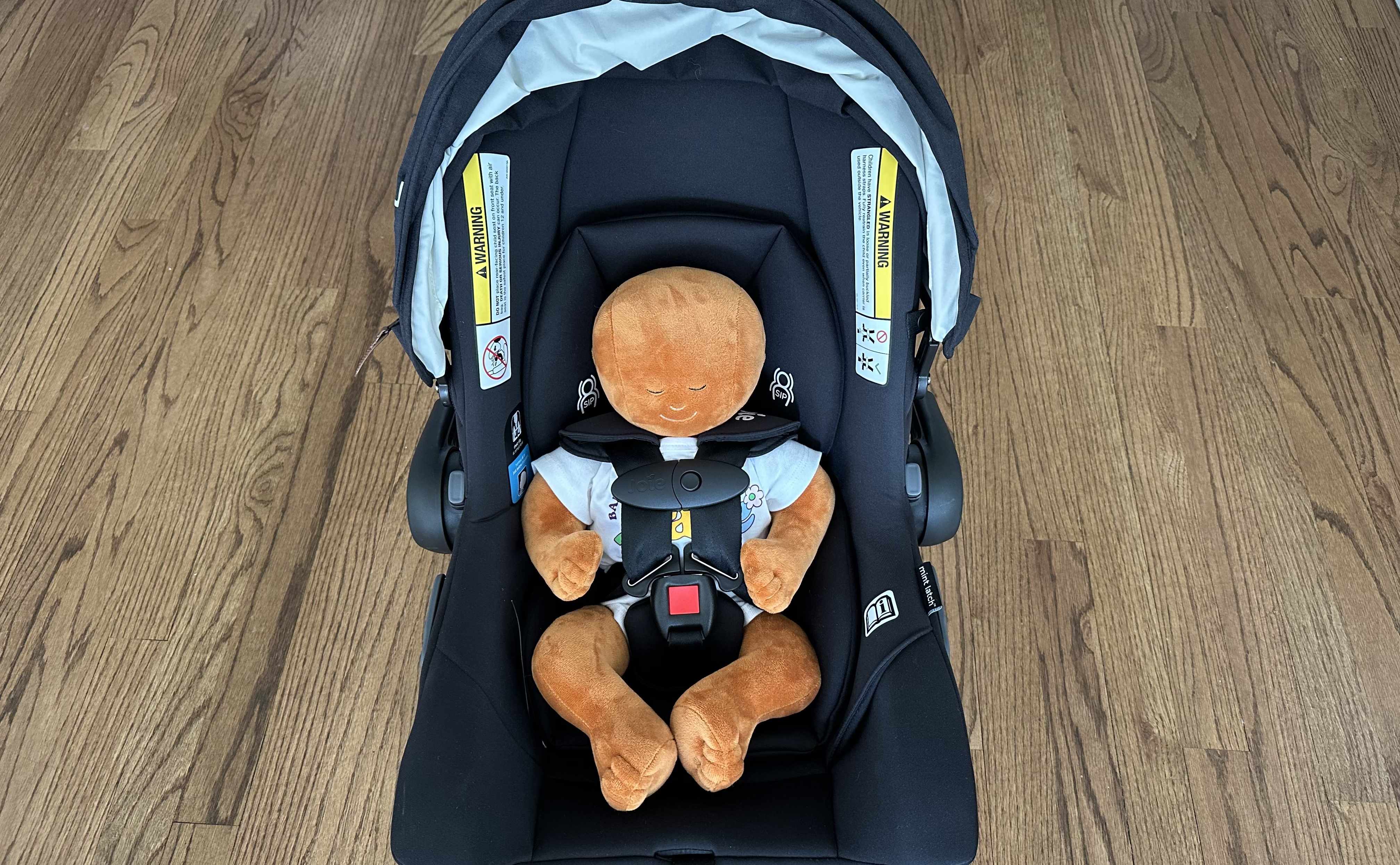
Front view of the Joie Mint Latch Baseless Infant Car Seat. (Photo: Jen LaBracio, Babylist Senior Gear Editor)
Babylist Pick: Graco SnugRide SnugFit DLX
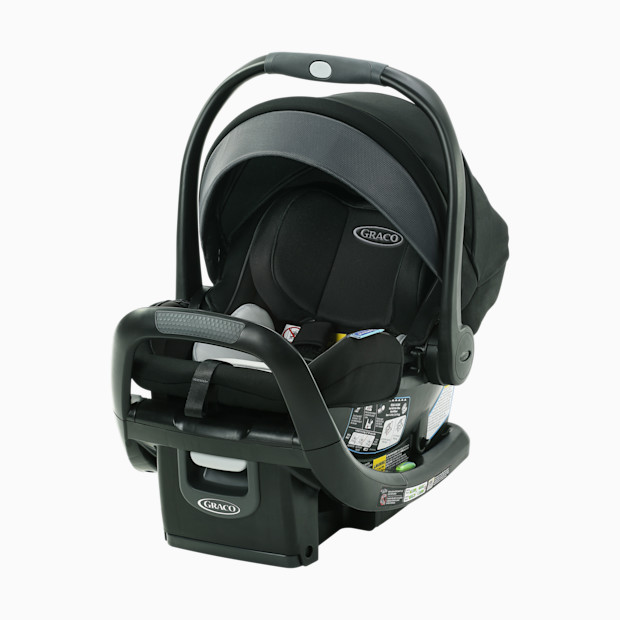
Graco SnugRide SnugFit DLX Infant Car Seat - Spencer
From $249.99Pros
- SnugLock system for straightforward installation
- Includes anti-rebound bar for added safety
- Seat pad removes and re-installs easily for cleaning
- Better newborn fit than many other Graco infant seats
Cons
- Heavier than some other infant seats
- Short canopy
TL;DR
A solid, user-friendly infant car seat with standout installation and better-than-average newborn fit. The Graco SnugRide SnugFit DLX installs easily thanks to SnugLock, includes an anti-rebound bar for added safety and has a removable seat pad that makes cleanup simple. It’s a bit heavier than some competitors and the canopy is on the shorter side, but it’s a reliable, well-rounded option.
Graco has a huge lineup of infant car seats, and the SnugRide DLX is one of my favorites—for two reasons. The first is installation. The seat features the brand’s SnugLock technology: just lift the SnugLock arm, thread the belt underneath, then push the arm back down to lock the belt into place. It’s simple, and the audible click helps you know the base is securely in place.
The second is fit. While some Graco seats struggle with newborn fit, especially for smaller babies, the DLX does not. It tends to fit babies of all sizes well, a feature that’s especially important for younger babies.
Other notable features include an anti-rebound bar for safety, a seat pad that’s easy to get on and off for cleaning and a five-position adjustable base with a bubble indicator. You’ll also only need one hand to adjust the handlebar, something many parents agree is really convenient. “The best thing about it is the one-handed handle release,” one parent noted.
Worth noting:
The SnugRide SnugFit DLX weighs almost 10 pounds, a few pounds heavier than some of the other infant seats on our list.
The canopy is pretty skimpy. It extends a bit, but it’s much shorter than the other seats in our roundup.
Additional Specs
Child Guidelines: 4-30 lbs, up to 32”
Car Seat Carrier Weight: 9.8 lbs
Stroller Compatibility: See list
The Best Infant Car Seats for Specific Needs
Every family’s setup is a little different. While the seats above work well for most parents, these picks stand out in specific scenarios, like smaller cars, frequent travel or unique day-to-day routines. If one of these situations sounds like you, these seats are worth a closer look.
Best Infant Car Seat for Small Cars
Clek Liing Infant Car Seat - Railroad Ziip (Flame Retardant Free)
From $499.99Pros
- Compact & narrow size = good for smaller cars or fitting 3-across
- Fits both smaller and larger infants well
- Packed with safety and comfort features
- Flame retardant-free; some colorways are GREENGUARD Gold Certified
Cons
- Pricey
- Harness straps must be manually rerouted as baby grows
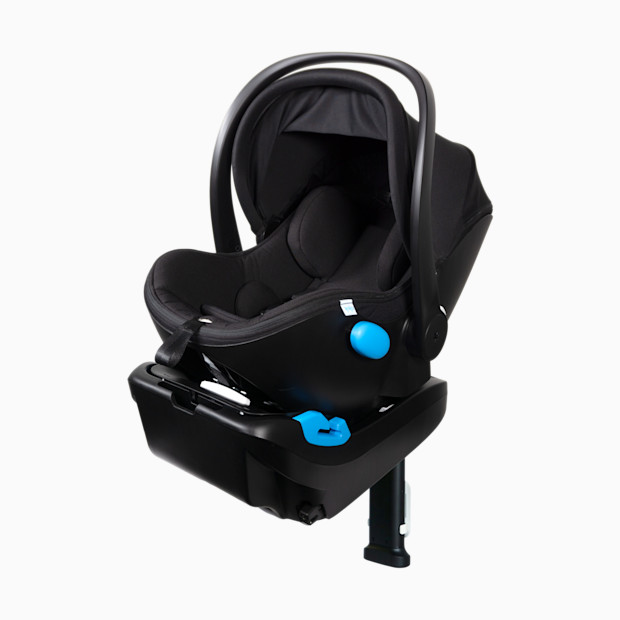
At under 17 inches wide and compact front-to-back, the Clek Liing is a great choice for smaller vehicles or if you need to fit multiple car seats across your back seat. It also stands out for its robust safety features—a “fan favorite,” according to CPST Lani Harrison—and it’s the infant car seat I used with my second son for exactly that reason.
Like the Nuna Pipa, the Liing uses rigid LATCH for a secure, stable installation and includes a load leg to help reduce crash forces. Seven recline positions (15 degrees total) help you achieve the best positioning, regardless of your vehicle’s seat angle. Unlike many infant seats, you can adjust the recline after installation. “This is a fabulous feature because you don’t have to reinstall to change the recline as the baby grows,” Harrison explains. (The Pipa has the same feature, though fewer recline settings than the Liing.)
Additional Specs
Child Guidelines: 4-30 lbs, up to 32”
Car Seat Carrier Weight: 9 lbs
Stroller Compatibility: See list
The base of the Clek Liing Infant Car Seat features built-in rigid LATCH connectors. (Photo: Jess MacArthur, Babylist Visual Designer)
Best Infant Car Seat for On-the-Go Families
Doona Infant Car Seat & Stroller - Nitro Black
From $650.00Pros
- Converts instantly from car seat to stroller
- Convenient for travel, rideshares and frequent in-and-out trips
Cons
- Very heavy
- No storage basket
- Low handle heigh, which can be uncomfortable for taller parents
- It's a car seat first—not designed for long stroller naps or extended walks
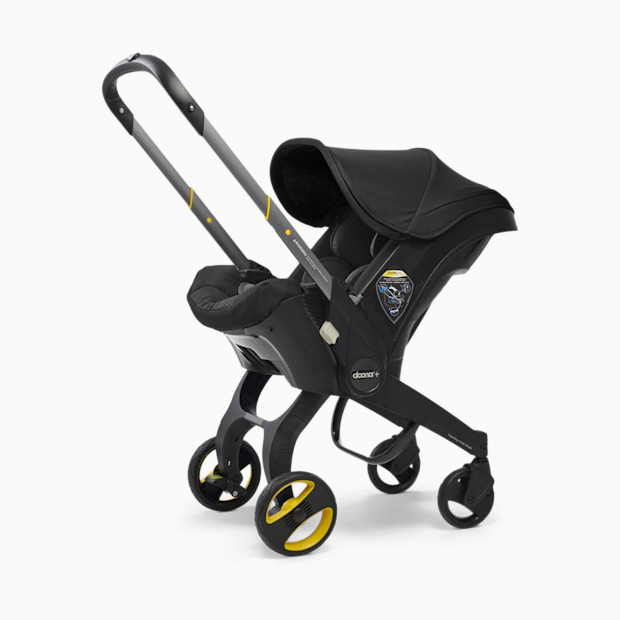
The Doona is a true innovation: an infant car seat that instantly transforms into a stroller with the click of a button. It caught on almost immediately and has been a parent favorite for years, consistently called out as a “can’t live without it” item by many Babylist parents in our annual survey. "The durability and versatility of this one product has made our lives so much easier and efficient!" one parent shared.
While not for everyone, the Doona delivers an unbeatable combination of convenience and versatility for the right family. It’s ideal for city dwellers who use rideshares frequently or who might have a long walk between their apartment complex and their car, frequent travelers, suburban families who are in and out of the car all day (think parents of multiple kids doing daily preschool dropoff or sports practices for older kids with baby in tow) or for someone who plans to babywear in lieu of using a stroller.
But there are some drawbacks to be aware of. It’s first and foremost a car seat, not a stroller, and like all car seats, it’s not safe for long stretches of sleep. It’s also very heavy, weighing almost 17 pounds—over 10 pounds heavier than some seats on this list. There’s no storage basket. And the handle on the Doona is low, so it can be awkward to push if you’re taller. (I’m 5’10”, and I have to lean over to push it.)
Additional Specs
Child Guidelines: 4-35 lbs, up to 32”
Car Seat Carrier Weight: 17.2 lbs
The Doona quickly and easily transitions from a stroller to a car seat. (Photo: Amanda Michelson, Babylist Senior Manager, Brand Partnerships)
Best Lightweight Infant Car Seat
UPPAbaby Aria V2 - Declan
From $449.99Pros
- Ultra lightweight
- Extra safety features, including anti-rebound bar and stability leg
- V2 offers added legroom
- GREENGUARD Gold Certified, flame retardant-free
Cons
- Only compatible with UPPAbaby strollers
- Inner seat bottom is narrow, so chunkier babies might feel more cramped
- Often outgrown by height sooner than other infant seats
- Anti-rebound bar and load leg take up more space front-to-back, so will be a tight fit in smaller cars
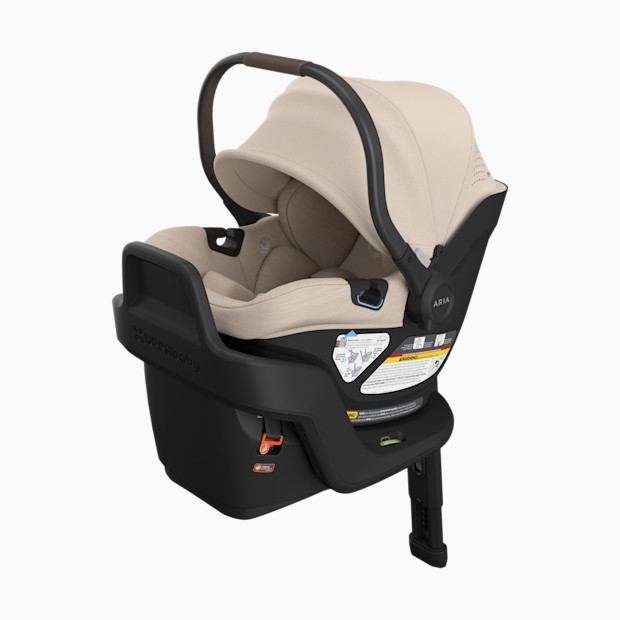
If weight is a priority when choosing a car seat, UPPAbaby’s newest addition is an excellent option. At six pounds minus the canopy and inserts, even I was surprised at how light this seat was the first time I picked it up—and I’ve carried a lot of car seats over the years. (The Aria is almost four pounds lighter than UPPA’s other popular infant car seat, the Mesa V3. Just remember the canopy and inserts do add a bit of extra weight, and while both can be removed, most people don’t use an infant car seat without its canopy.) Safety-wise, there’s an anti-rebound panel and a load leg, two excellent additions.
It’s a great choice for parents who prioritize carry weight above all else, but the narrow seat and larger base footprint mean it won’t be the best fit for every baby or every car.
Additional Specs
Child Guidelines: 4-30 lbs, up to 30”
Car Seat Carrier Weight: 6 lbs (6.8 lbs with canopy and inserts)
Stroller Compatibility: See list
Best Value
Pros
- Lightweight
- Includes anti-rebound bar for added safety
- Clean, modern look
Cons
- Harness straps must be manually rerouted as baby grows
At just under $150, the Joie Rue offers an incredible value considering its features. There’s an anti-rebound bar—an impressive safety extra at this price point—and a lightweight design, putting the seat at just over seven and a half pounds. I also love the colors, fabrics and modern look, which give it the same feel as seats triple the price.
Additional Specs
Child Guidelines: 4-30 lbs, up to 30”
Car Seat Carrier Weight: 7.7 lbs
Stroller Compatibility: See list
Best Infant Car Seat for Preemies and Small Babies
Pros
- Low weight minimum (3 lbs); fits even the smallest babies well
- Lightweight
- Good value
Cons
- Harness straps must be manually rerouted as baby grows
- Long front-to-back
- Only compatible with Evenflo strollers
With the lowest weight minimum on the market at just three pounds, the Evenflo LiteMax 30 is an excellent choice for preemies and smaller newborns. “It has a nice flat back and virtually never causes head slump or has head positioning issues,” says CPST Harrison. It’s also one of the lighter infant seats on our list, weighing just over eight pounds.
The LiteMax is also a significant value for what it offers, typically priced around $149. That said, Harrison notes that the seat can sometimes be tricky to release from its base. You’ll have to manually rethread the harness, hip straps and the crotch buckle as your baby grows, and the seat is longer front-to-back, which may be a consideration in compact cars or with taller front-seat occupants.
Additional Specs
Child Weight/Height Guidelines: 3-30 lbs, up to 32”
Car Seat Carrier Weight: 8.17 lbs
Stroller Compatibility: See list
Why Trust Babylist?
Babylist is the expert in baby; we know baby gear inside and out. We talk with parents face-to-face in our showroom and on our user panels and hear from thousands annually via our Best Baby Products online survey. We know what items millions of expecting parents are adding to their baby registries.
Firsthand professional and personal experience. As a CPST, I'm trained in car seat installation, usage and safety. I stay up-to-date on car seat education through continuing education classes, seminars and CPST education groups. I'm also Babylist's gear editor; I've been writing about baby gear at Babylist since 2019 and have been the gear editor since 2021. I've personally tested and reviewed dozens of infant car seats during this time. And I'm a mom of two boys, ages four and 11—so I have over a decade of hands-on car seat experience with my own kids.
Expert interviews. I spoke to several experts while researching and writing this guide, including three other CPSTs: Rebekah Kimminau, founder of The Baby Gear Consultant, Samantha Taylor of Mama Knows Car Seats, and Lani Harrison, a CPST with over a decade of experience in car seat safety. I also interviewed Joe Colella, Director of Child Passenger Safety at the Juvenile Products Manufacturers Association and 2020 Child Passenger Safety Hall of Fame Inductee, a leading industry voice on quality and safety for baby and children’s products.
Infant car seat data. I regularly analyze which baby products our users are adding to their baby registries the most (and which ones they aren’t) and what our team of Merchandising experts—our buyers who are responsible for ensuring the Babylist Shop is stocked with the best and newest gear—is excited about. Studying this kind of data helped us choose which infant car seats to narrow in on and which ones to recommend to new and expecting parents.
Feedback and reviews. I reviewed comments and feedback from Babylist’s annual product survey of thousands of parents, read customer reviews from hundreds of Babylist users and spoke to parents on our staff about their real-life product experiences.
Infant Car Seats 101
What is an infant car seat?
- A rear-facing car seat designed specifically for newborns through about one year old
- Built to safely support tiny bodies
Installation
- Most infant car seats attach to a base that stays installed in your car for easy click-in, click-out convenience
- All infant car seats can be installed without a base using your vehicle's seatbelt
Usage guidelines
- Use until your baby reaches the seat's height OR weight limit (typically 30-32" or 30 lbs) OR baby's head is within 1" of the seat's top
- As soon as one of these limits is met, it's time to move to a convertible car seat
Safety standards
- All infant car seats sold in the US must pass the same federal safety standards
- Extra features don't automatically mean a seat is safer
- Proper installation and fit are what matter most for safety
💡 Check out The Infant Car Seat Gear Glossary for a quick breakdown of common car seat terms and features.

What You Need to Know About Infant Car Seats
Most parents choose an infant car seat because it’s designed specifically for newborns and young babies. It’s portable, easy to move between cars and often clicks directly into a stroller—features that matter a lot in those early months.
How infant car seats compare to other types
Convertible car seats are designed to grow with your child, transitioning from rear-facing for babies and toddlers to forward-facing for older kids. (Rotating and all-in-one seats fall into this category.) Some can be used from birth, but they’re heavy, bulky and meant to stay installed in the car. Many families choose a convertible car seat as the next step once their baby outgrows an infant seat.
Booster seats are used much later, after a child outgrows their forward-facing convertible car seat. Think of a booster as the step between a car seat and a seatbelt; it elevates a child in the vehicle seat, making the adult seatbelt fit better on little bodies. Boosters aren't appropriate for babies or toddlers.
Infant car seat vs. convertible car seat: Which should you choose?
If you plan to drive with your baby, you’ll need a car seat—but whether you start with an infant seat or a convertible comes down to preference and lifestyle.
Convertible car seats have a longer lifespan and mean one less item to buy later. But for most families, an infant car seat is the better first choice. “There are a few convertible car seats that fit newborns well,” says CPST Samantha Taylor, “but far and away the newborn fit of an infant seat is more consistent.”
Convenience is another big factor. Infant car seats are easier to move between vehicles, simpler to reinstall and make it much easier to run quick errands or get through outings like frequent early pediatrician visits. "Unless you feel particularly comfortable baby-wearing from birth, for example, it’s difficult to bring a newborn into the grocery store without an infant car seat, as most babies cannot sit up in a shopping cart safely until beyond six months of age," says Taylor.
They’re also a lifesaver when it comes to transferring a sleeping baby from the car to the stroller—especially if you’re using a travel system or a compatible stroller with adapters. (You can check our Car Seat and Stroller Compatibility guide to see which brands work together.)
Convertible car seats have their place, but for most parents, an infant car seat offers the best combination of fit, safety and day-to-day ease during the newborn months.
How long can babies use an infant car seat?
Infant car seats can be used from day one until your baby reaches the seat’s maximum height or weight limit, typically around 30–32 inches or 30 pounds, depending on the model.
You'll also need to consider your child's torso height: the length of their upper body. Most rear-facing car seats follow the “one-inch rule,” which means there must be at least one inch of space between the top of your child’s head and the top of the car seat. A baby with a longer torso may outgrow an infant seat by height before reaching the stated height or weight limits—and once that one-inch rule is met, it’s no longer safe to use the seat.
“You must switch if any one limit of the car seat is met,” explains CPST Taylor. In other words, if your baby exceeds the height limit, weight limit or the one-inch rule—even if the other limits haven’t been reached—it’s time to move to a convertible car seat.
Most babies outgrow their infant car seat around their first birthday, and many outgrow it by height well before weight. But growth varies widely, and some babies may need to switch sooner. When that time comes, our Let Us Help You Pick Your Next Car Seat guide can help make the transition easier.
How to Choose a Safe Infant Car Seat
Ask any car seat expert how to choose the safest car seat and you’ll likely hear the same thing: all car seats sold in the US must meet the same federal safety standards. “A higher price tag does not necessarily equate to more safety," says Joe Colella, Director of Child Passenger Safety at the Juvenile Products Manufacturers Association and 2020 Child Passenger Safety Hall of Fame Inductee.
So what does matter? A safe car seat should meet these criteria:
1. It fits your child
“The right car seat is one designed for your child’s height, weight, age and developmental needs,” says Colella. A good fit, especially in the newborn stage, helps keep your baby properly positioned and supported.
2. It fits your vehicle
A car seat can only protect your child if it’s installed correctly. “Following car seat installation instructions and the vehicle owner’s manual guidance is crucial.”
3. It’s easy to use correctly, every time
You and anyone else who drives your child need to be familiar with the car seat and its features and should be comfortable using it correctly on every ride.
These three things are inextricably linked to a car seat’s safety. You can buy a seat with all the extra safety features on the market, but if it’s impossible to install or doesn’t fit well in your car, none of the extra bells and whistles matter.
“With hundreds of seats to choose from, rest assured that every single one is a safe choice,” echoes Taylor. “If you’re buying a car seat from a reputable retailer or directly from the manufacturer, it passed rigorous safety testing.” She recommends narrowing down your choices by focusing on four factors: your budget, safety features, unique seat features and compatibility.
Car seat fit
Fit-to-vehicle is one of the biggest concerns we hear from parents—and for good reason. Here's how to narrow it down:
Measure first. Look up a seat’s dimensions and measure your back seat, paying attention not just to width but also front-to-back space and things like deep bolsters or a narrow middle seat. It's not foolproof, but it's a good place to start.
Consider car size and driver height. Compact cars and taller drivers often need seats with a smaller front-to-back footprint. (This is often a bigger issue with convertible car seats, which have a much larger footprint than infant seats, but it's still worth noting.)
Try before you buy, if possible. Some stores allow test installs, and CPST-run groups like Car Seats for the Littles can help troubleshoot fit questions online.
Infant car seat safety features
These are the safety features to prioritize when shopping for an infant car seat.
Anti-rebound bar: In the event of a crash, a car seat will move toward the point of impact. An anti-rebound bar limits how much a seat rebounds toward the back seat after a crash.
LATCH: LATCH stands for Lower Anchors and Tethers for CHildren. LATCH is an alternative method for securing a car seat, utilizing built-in anchors and tethers instead of a car's seatbelt. It consists of two lower anchors (found in the seat crack of your car) that clip or hook onto two lower attachments on your car seat, + a tether anchor. LATCH is not available in every seating position, so you’ll need to consult your vehicle manual. It's also not always the preferred installation method; every car seat usually has one installation method recommended by the manufacturer. Other LATCH facts to note: Both LATCH and seat belt installations are safe, but in most cases are not to be used at the same time, and there are LATCH weight limits that you need to be aware of before utilizing this system to install your seat.
Side-impact protection: All car seats sold after December 5, 2026 must meet updated side-impact standards; some models already exceed them.
Stability leg/load leg: A load leg is a metal pole that extends from the base of an infant car seat to the vehicle's floor. Also called stability legs, they help reduce crash forces, particularly to the head and neck. (Not all vehicles allow the use of load legs, so always check your owner’s manual.)
Additional features to consider:
Alert systems: Can notify you if a child is left in the car or improperly buckled.
European belt path vs. American belt path: A belt path is how you’ll install your car seat when you’re not using a base. (Think for travel, rideshares, etc.) Both belt paths start by routing your car’s lap belt over your baby’s lap area. A European belt path wraps the belt around the back of the infant seat for extra protection. Car seat safety experts recommend the European belt path as it allows for a more secure installation and decreases crash forces. The vast majority of seats currently on the market have European belt paths.
No-rethread harness: As your baby grows, you’ll need to adjust your seat’s shoulder straps to accommodate the correct fit. A no-rethread harness means you can adjust the straps up and down without needing to manually reroute them through the back of the seat.
Infant car seat convenience features
Ease of use matters—because a seat that’s easier to live with is more likely to be used correctly.
Canopy: A canopy is an extendable piece of fabric found at the top of a car seat. Larger, extendable canopies offer better sun protection and privacy.
Ease of cleaning. “A lesser known fact about car seats is that not all covers are machine washable,” explains Taylor. Babies are messy, and this feature is a must-have for some parents.
Fabric: Look for durable, breathable fabrics; GREENGUARD Gold Certification or flame retardant-free materials are must-haves for some families.
Fit: A seat that fits well is both safer and more comfortable for front-seat passengers.
Peekaboo window: A small opening found in the fabric of a car seat canopy that lets you check on baby without disturbing them. It can also help with airflow.
Stroller compatibility: You can snap infant car seats into many strollers or stroller frames. You can buy a prearranged set, like a travel system, or mix and match brands as long as they are compatible via car seat adapters.
Weight: Lighter seats are easier on your arms and back, but not a must-have for everyone.
Infant Car Seat Frequently Asked Questions
Why do infant car seats face backwards?
“According to the American Academy of Pediatrics and the National Highway Traffic Safety Administration, it's safest for infants and toddlers to ride rear-facing in a car seat for as long as possible,” explains Colella. “This recommendation is based on data showing that rear-facing seats offer better protection in crashes for children from birth through 23 months of age, along with child development and biomechanics considerations.”
Where is the best place to put an infant car seat?
The center of your vehicle’s back seat is statistically the safest place to install your child’s car seat. That’s because many crashes involve a side impact, so a middle position will help to avoid direct impact. However, not all vehicles allow for a car seat in every spot that has a seat belt. If you can’t install your car seat in the center, choose the position where you can install it tightly using either LATCH or your vehicle’s seat belt, according to the AAP’s car seat safety information guidelines. And always check your specific vehicle’s owner’s manual before installation. The Safe Kids’ Ultimate Car Seat Guide Installation Tips is a great resource for car seat installation.
Can my baby sleep in their infant car seat?
Yes, babies can fall asleep in an infant car seat, but it’s important to then transfer them to a safe sleep space like a crib or a bassinet, as the AAP recommends against the use of car seats for sleep outside of a car. The AAP also advises that babies have a break from the car seat every 90 minutes.
Can I buy a used infant car seat?
Car seat safety experts always recommend purchasing any car seat new, as a used seat may be damaged or may not meet current safety regulations. If you do end up selecting a used infant car seat, get it from someone you trust. Be sure the seat has never been in a crash, look up the seat’s expiration date and check for any recalls through NHTSA. If the seat is dirty, follow the manufacturer’s strict rules around how to clean the car seat; each seat has a specific set of cleaning instructions to maintain the seat’s safety and integrity.
